Watch the video if you prefer that.
start here
It’s likely you’ve heard the phrase “Dancing in the rain.”
But what about “Singing while on fire”?
But literally singing.
While literally on fire.
One Georgian man did just that.
‘Tis a Story
On March 18, 1991, while the river flowed and the wind was felt rolling over the hills of the gorge, he turned to ashes while singing a simple song in the faces of his enemies.
With this last hoorah, he joined a long list of warriors during a time where freedom—or control—came at the price of souls.
This event left an indelible mark on both his captors and community.
One side was haunted.
The other knew he was built for this.
But was it truly worth it?
This is the story of Merab Mindiashvili.
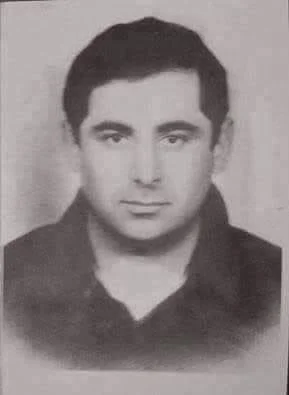
Merab Mindiashvili
Context
By this time, Georgia had been a part of the USSR, or Soviet Union, for 70 years.
Although it existed under this banner, not all Georgians lost their sense of a distinct identity.
Religion, lineage, and their language still mattered to them.
This was in spite of the aggressive and bloody oppressive actions the Union took in an attempt to eliminate national consciousness in the nations that it was composed of.
They wanted people to have a homogenous “Soviet” identity.
But, by the late 80s, the tide was turning.
And quickly.
With this change, conflicts increased.
One notable event was the April 9th tragedy, also known as the Tbilisi Massacre or Tbilisi tragedy.
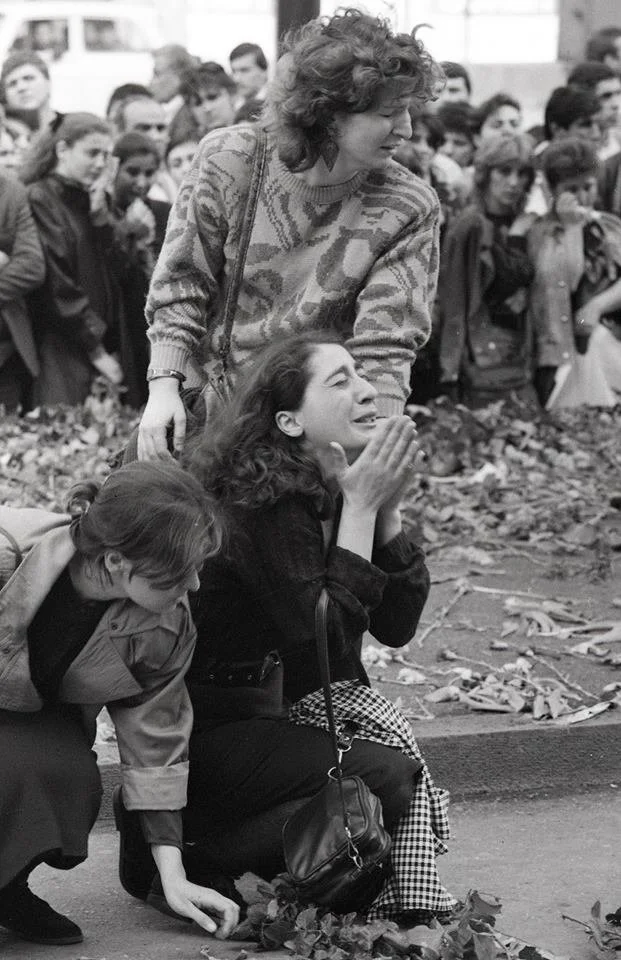
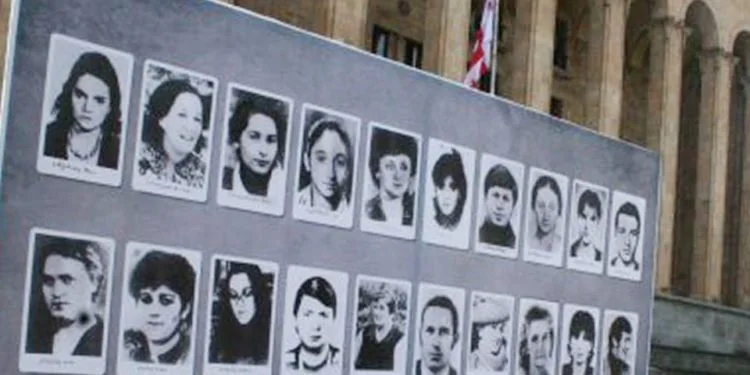
Photos from the Tbilisi Tragedy which occurred on April 9, 1989 in Tbilisi, Georgia
It was on April 9, 1989, when Soviet troops killed 21 protestors—mostly women—and injured hundreds of others in Tbilisi, the capital of Georgia.
What was a peaceful, anti-Soviet protest turned into a horror scene.
The protestors were led by the Independence Committee in response to a number of different factors.
Overall, the fight was for an independent Georgia free from Soviet control.
One of the committee leaders was Zviad Gamsakhurdia.
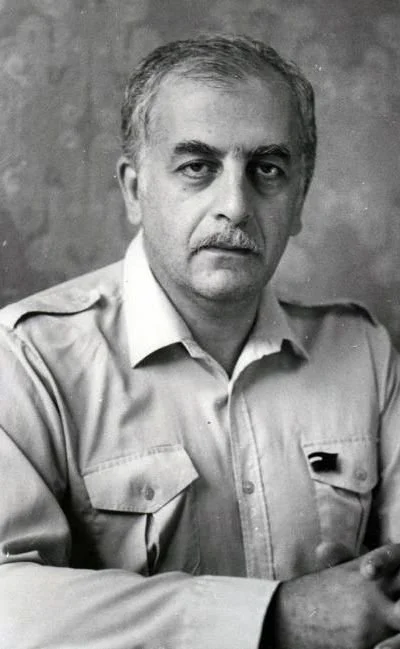
Zviad Gamsakhurdia
Remember him and this date.
They play a role in Merab’s story.
The fight for an independent state clearly entailed that clear geographic boundaries were required.
A country can only claim so much real estate on Earth.
But Georgia was not ethnically uniform.
And thus, they had a problem.
The Problem
Inside Georgian territory were two autonomous regions that had their own sense of a distinct identity that was neither fully Soviet nor fully Georgian: South Ossetia and Abkhazia.
The history and relationships of these groups get really complicated and nuanced.
So, we’re not going there right now.
This story involves South Ossetia.
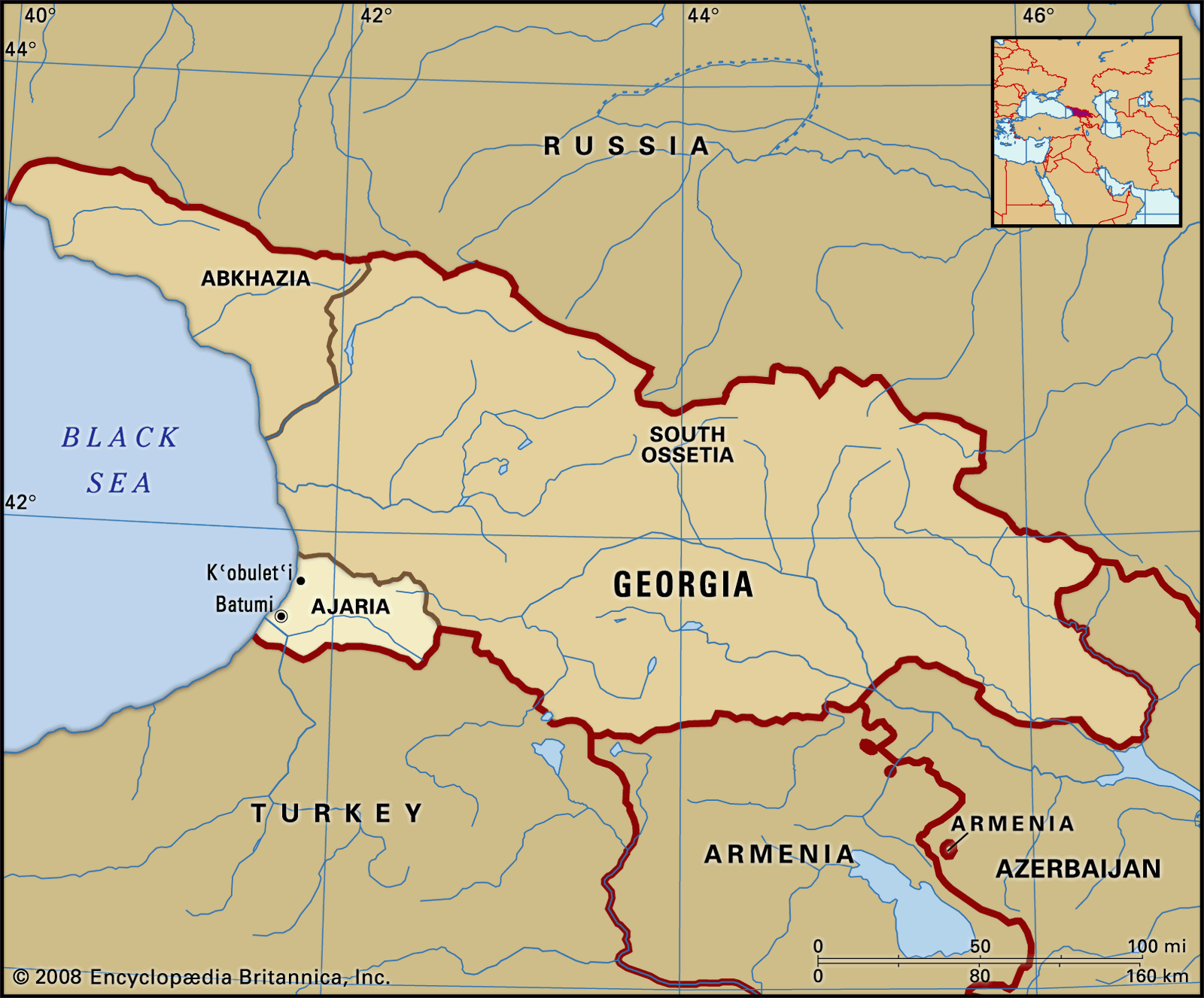
reference map
South Ossetians largely viewed themselves as culturally closer to the North Ossetians, who were within Russia’s territory, than with the Georgians in the valley below.
However, Georgians, Ossetians, Russians, and other ethnic groups lived on the land.
As long as the Soviet Union was intact, the South Ossetians need not worry about Georgia fully incorporating them into one national identity.
But, as we know, the USSR was disintegrating.
And quickly.
So for many of the Ossetians, the nationalistic rhetoric and energy that was growing in Georgia likely looked threatening to them.
What would become of them and their identity if Georgia were to be thought of as only for “The Georgians”?
Some viewed their response to this as survival.
Some saw it as separatism, a manipulation by Moscow, or betrayal at the most critical moment on which freedom hinged.
Thus, they found themselves in a war within a war.
Each side viewed itself as defensive and the other as aggressive.
Fear hardened into certainty.
Neighbor turned against neighbor.
Villages burned, people died, and others disappeared.
It wasn’t clean, and there were no clear frontlines.
This war consisted of neighborhood militias, family ties, loyalty, and emerging leaders.
Weapons were acquired through black markets, and control depended on whoever could enforce it that day.
It was personal.
And In Comes Merab
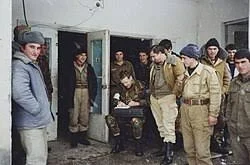
This is the fight Merab Mindiashvili found himself in.
Born January 14, 1957, Merab was well acquainted with what each side wanted and was fighting for.
And he knew where he stood on the matter.
As harassment, hate, and violence grew between the Ossetians and Georgians, Merab took on the role of a fighter.
He returned from working as a driver in Russia in 1989 just as these tensions were really heating up.
It was known that Ossetian separatists said they would, for example, boil Georgians alive if caught.
However, there were Georgians who spewed the same treacherous rhetoric back toward the Ossetians.
The entire situation was incredibly barbaric.
But Merab was unfazed by these threats and promises.
People who knew him reported that he himself was fearless and instilled a sense of security in his community by his presence alone.
He did things that would give one legitimate reasoning to be cautious of him.
The Ossetians and Russians alike feared him.
So much so that he was spoken of with elements of legend, and his death in particular would be celebrated.
To give the Georgians in the area a chance to defend themselves, Merab began distribution of weapons to the families in the Didi Liakhvi Gorge region.
This enabled them to resist aggressive Ossetian separatist attacks and preserve the Gorge for a while.
Three weeks before he was caught, nine villages in this area had elected him as their leader.
And lead, he did.
On March 18, Merab and his brother-in-law, Zurab Khabareli, were traveling down Eredvi Road to meet with, wait for it… Zviad Gamsakhurdia!
Remember him?
He was one of the leaders of the Independence Committee that organized anti-Soviet protests.
Ossetian separatists obtained knowledge of this from Georgians, allegedly including Goga Khaindrava, a rival of Zviad, and knew exactly where to intercept them that fateful day.
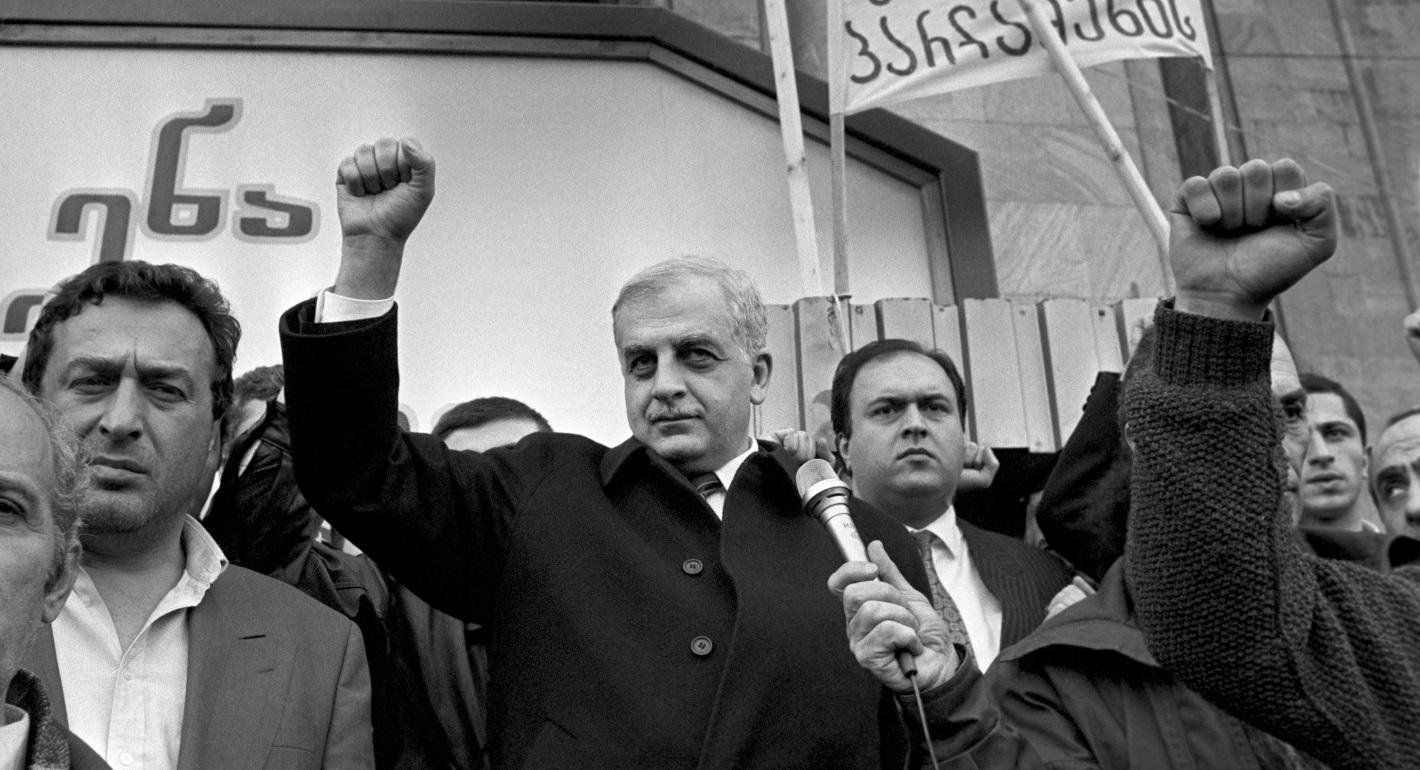
Merab and Zurab were going to meet Zviad
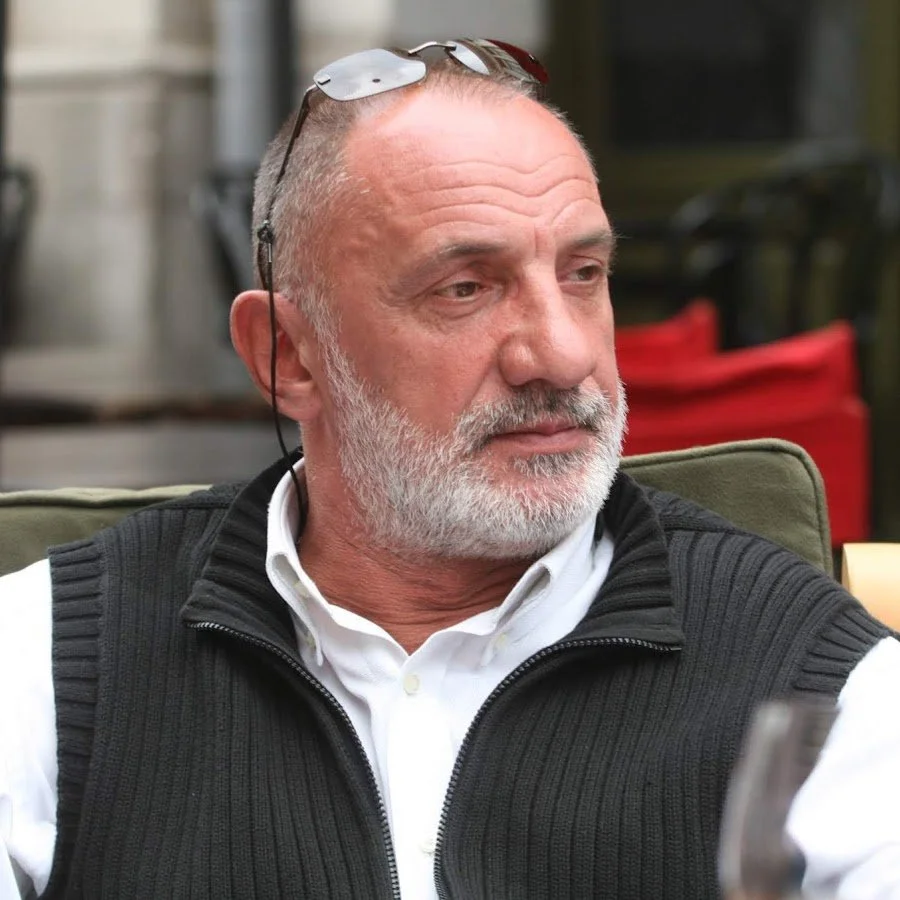
Goga Khaindrava
Merab didn’t have his weapon at the time.
Had he, this story may have gone a completely different way.
But we’ll never know.
The Fatal Event
In those early morning hours in the gorge, Merab and Zurab probably talked.
Maybe joked.
Who knows?
But in one moment a gun was aimed.
And the next, a bullet ripped through Zurab Khabareli, taking his life immediately.
The fire kept coming as Merab jumped out from behind the wheel, took a few steps, and turned to help his brother-in-law.
At that moment, he took a bullet to the stomach and was taken prisoner.
The separatists tied him to a tree and, making good on their threats, set him on fire.
They had caught the feared Georgian.
But while being burned alive, Merab did something that would etch itself into the memory of his killers and elevate his status as a legendary figure for years to come.
He sang “Shavlego”.
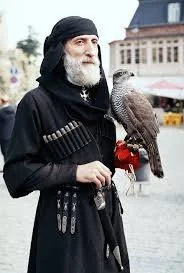
The traditional chokha
This song is about a warrior hero from Georgia’s past whose black chokha (the traditional clothing) was painted red from soaking in the blood of foreign enemies.
This song became a unifying tune that embodied the fighting spirit associated with the Georgians for thousands of years.
And it’s not far-fetched to understand why this would leave Merab’s captors unsettled, to say the least.
Later that morning, Merab’s people, including his childhood friend and fellow fighter Nugzar Kaulashvili, found his charred body after seeing smoke rising from the gorge earlier.
His wife was pregnant with their fourth child at the time.
A daughter.
Nugzar reported that his friend was buried three days later and the flow of mourners did not cease as Merab was loved and respected by many.
What Came After
According to those who knew him, what he cared about was the truth and pursuing it.
Although the pain did not ease, Merab was celebrated as a national hero by many Georgians.
Conversely, in celebration of their kill, the separatists set off fireworks in Tskhinvali, the capital of South Ossetia.
But despite this celebration, Merab’s actions left his captors bewildered, unable to comprehend where his strength came from.
During my research, I found out that Merab’s death was actually filmed, although I couldn’t find the video.
Nor do I think I could watch it if I were able to.
Not only was it filmed, but a Georgian allegedly took the video and spread the message that Georgians were burning Ossetians alive (although Merab’s situation was the exact opposite).
This betrayal went deep and a quick Google search of the accused will tell you that he is not viewed all that positively by a number of vocal Georgians.
At this time, I have not done extensive research on this person.
Therefore, I will refrain from attaching his name to this particular event.
This story is about Merab.
Changing Tides
Less than two weeks after this event, over 98% of voters in Georgia chose a free, independent nation.
The formal declaration took place on April 9, 1991—exactly two years after the Tbilisi Massacre.
And remember Zviad?
He was elected as the first president of the now independent Georgia in May of that year.
Furthermore, the USSR officially collapsed on December 26, 1991.
Nine months after Merab’s death.
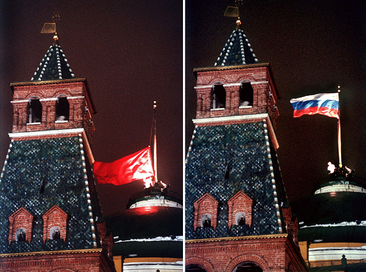
Flag Change: Fall of the Soviet Union
Georgia and the larger Caucasus are often overlooked regions.
Yet, they are rich in history, nuance, and strategic importance.
This wouldn’t be the end of the conflicts or bloodshed for these groups mentioned in the story.
Identity, freedom, right, wrong, loyalty, betrayal, life, and death.
These people know it all.
Today, South Ossetia exists as an autonomous region in Georgia under Russian control.
They’re considered occupied territory by Georgia and the larger part of the world but an independent republic by themselves and Russia.
Very convoluted.
Additionally, Georgia is currently experiencing a political crisis internally.
There is concern that the ruling Georgian Dream Party is pushing laws that resemble Russian-style restrictions and moving against democratic and Western integration.
To top it all off, there are concerned murmurs brewing as to what they will do if Russia concludes their war with Ukraine and turns its attention back to Georgia.
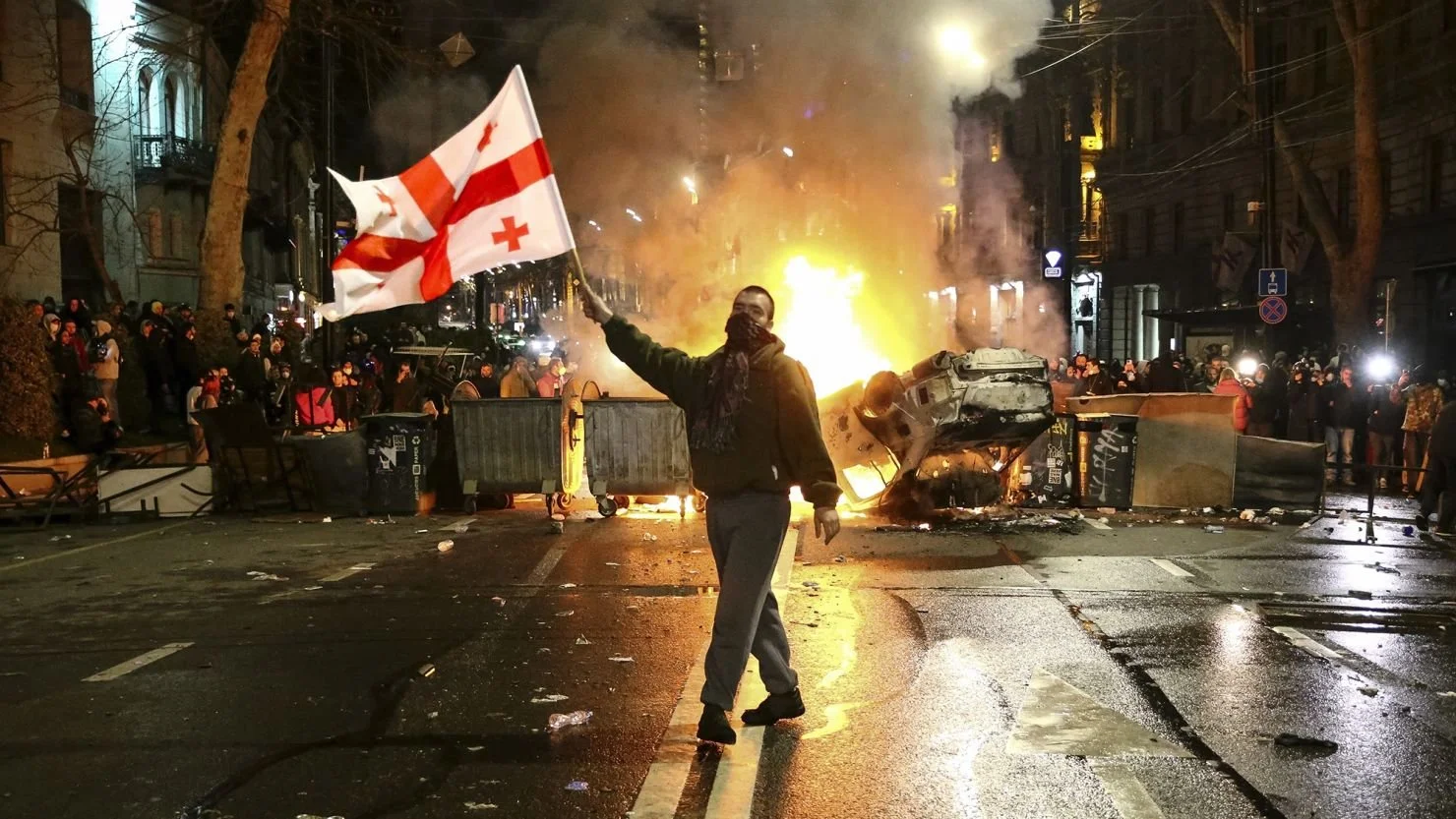
Georgia is in a political crisis today
Merab Mindiashvili represents the indomitable spirit found throughout Georgia’s history.
People will have different views on how everything went down, and there are elements we may never know.
What remains is a story of both tragedy and celebration.
A story that means SOMETHING to everyone involved.