Imagine one, quiet night you’re alone and suddenly feel someone enter the room.
All of your senses kick into high gear as you slowly turn your head.
In the dark you make out another set of eyes staring right back at you.
And though they seem human, you can tell that something just isn’t right.
One famous story of someone like this was Zana of Abkhazia.
where are we going?

What Zana may have looked like
Captured in a forest, Zana was kept in semi-captivity by a 19th century nobleman.
No one knows where she came from, but she wasn’t like any human these people had ever seen.
She was covered in hair, abnormally strong, could swim against a river current, run faster than a horse, never spoke any discernible human language… and liked to drink apparently.
Everything about her aligned with descriptions of other human-like sightings around the world.
But what exactly was this situation?
Was she a misunderstood human or was she really an unknown creature?
Were people just racist or did they know something we don’t?
What does Zana teach people?
And who else is living alongside us that we are unaware of?
the context
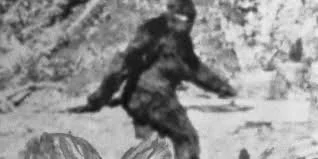
Reported bigfoot sighting
Bigfoot or Sasquatch: A bipedal, ape-like creature with dark brown or reddish hair often found in the Pacific northwest.
The Abominable Snowman or Yeti: A bipedal, ape-like creature with dark grey or reddish hair found in the Himalayas.
Almas, almasty, abnauayu, kaptar, mazeri, ochokochi, mechae-adame, tskhiss katsi: Names by which a bipedal, ape-like, wild man of the Caucasus is known as in the region.
But what do all of these creatures have in common besides their appearance?
It’s that there has been no substantial evidence found for their existence.
However, reported encounters have all been similar among people who have never met.
Although the Almas or Almasty of the Caucasus is not as sensationalized as Yeti or Bigfoot, it indeed has caused quite a ruckus for researchers and others who knew about it.
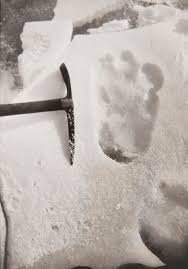
Eric Shipton’s famous footprint photo
With Eric Shipton’s famous footprint picture taken on Mt. Everest in 1951, Western media was set ablaze with the mysterious and energized curiosity of the Yeti.
This did not go unnoticed by the Soviets.
People in the USSR from all walks of life began sending in letters to scientific authorities and publications about their own encounters with this creature.
However, before the Yeti craze, their reports weren’t considered all that serious by Soviet scientists.
Not until they reached Dr. Boris Porchnev.
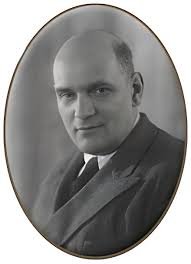
Dr. Boris Porchnev
A revered Soviet historian and anthropologist, the volume, simplicity and consistency of these accounts piqued his interest.
As he thoroughly reviewed the reports, the possibility of this wild man became less mythical and more plausible.
This was definitely a controversial idea to the prevailing Soviet scientific mentality.
However, Dr. Porchnev had clout.
He pushed for the study of the almastys’ existence to be treated as a true zoological and anthropological study.
In fact, he coined the term “relict hominid” to describe this field of research.
Relict hominid simply refers to primate or archaic humans who were thought to be extinct but survived in isolated pockets.
One of his prevailing hypotheses regarding the almastys was that they were actually neanderthals that had somehow survived.
Clearly, not everyone would take this seriously.
However, some did.
One of these people was a respected French-Soviet doctor named Marie-Jeanne Koffman.
Her story is quite interesting.
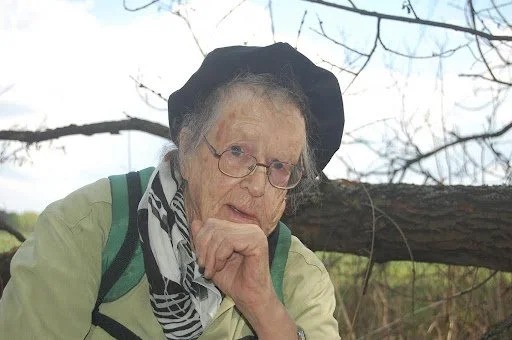
Dr. Marie-Jeanne Koffman
Dr. Koffman was a surgeon by trade and an alpiner by… well other than trade.
She actually served as an army captain and surgeon in the Soviet Red Army during WWII.
The real deal she was.
Through this myriad of experiences -as well as her mountaineering skills- she picked up a whiff of the almasty.
Not the actual almasty.
Although, a number of people she interviewed did tell her that they were funky funky.
But, no.
She heard the talks brewing about this forest dwelling creature possibly being real and attested to.
According to her, she was another skeptic.
They were people of science and material evidence.
If it wasn’t proven then it could not possibly be real.
Especially the idea of a hairy, semi-ape semi-human running around in the forests and having normalized encounters with people.
No way…
But Dr. Koffman still listened in on all the hoopla surrounding it and eventually decided she’d join in.
Dr. Porchnev, spearheading this endeavor, managed to convince the Academy of Sciences in the USSR to officially sponsor an expedition group to Pamir to investigate the problem of the “snowman”.
Dr. Koffman was a part of that expedition in 1958.
However, it ended in failure.
Critics leveraged this failure as proof that this endeavor was frivolous and of no substance.
Thus, the group dissolved completely by 1960.
But around 1958, three reputable sources were discovered to have witnessed this hairy, brutish, human-like creature in the Caucasus- all at different times.
They were unrelated and all non-natives of the region.
This is when the almas of the Caucasus came into full view.
But due to the lack of organizational support, Dr. Koffman and other researchers had to find their own way to pursue this matter.
She set out across the Caucasus as a skeptic but became a believer that there indeed was something strange out there.
As she traversed the storied region, she documented over 500 reports from diverse people all reporting similar experiences of the almasty.
Additionally, she came across material evidence of someone being in the areas that humans were not or were not frequenting.
These findings helped to further the idea of the wildman as being based more in reality than myth.
But with no physical body of one of these creatures, doubt remained up in the air.
Or did it?
zana’s story
Rumors floated on the wind of a wild woman living in an untamed, sparsely inhabited forest near Tkhina village in Abkhazia in the mid-1800s.
Besides simple hunters, shepherds and villagers, no one had any real idea that something strange was going on.
To the locals, it was normal.
But to the outside world they were mysteries to be uncovered.

Abkhazia
Upon request, hunters set out to capture this wild woman spoken about in the forest.
There are numerous accounts as to how this occurred.
For example, one source claims that she was lured in by the scent of one of the hunters' pants which he stripped off and left on the ground, enticing her curiosity which led to her capture.
Another source claims that the hunters used tried and true tactics of restraint to capture her.
However it happened, the hunters caught this wild woman and were fascinated by her appearance.
She was big, had elongated mammary glands, and was covered in thick reddish hair across her body.
She didn’t speak with any discernible human language and was abnormally strong.
The story goes that she was brought to Prince Achbad in Abkhazia who passed her on as a gift through a vassal, Chelokua, to a nobleman named Edgi Genaba.
On Genaba’s land in the small village of Tkhina is where the wild woman, given the name Zana, would live out the remainder of her days.
Zana was kept in an enclosure as she reportedly behaved so wildly, people were afraid to get close to her.
She was kept in this state for a few years.
During this time, she reportedly dug a hole in the ground for herself to sleep in.
When she became calmer, she transitioned to being bound by a wattle fence while tethered.
People would throw things at and mock her to which she would bare her teeth and howl.
Some people would try to get her to wear clothes, but she shredded them.
They tried to offer her a warm place to sleep on cool days.
She refused.
Eventually, she was given the liberty to wander about the village, but she never wandered too far from the home.
Clearly, Zana was different.
But we’ve only scratched the surface of her story.
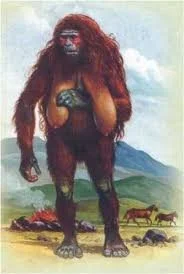
An artistic interpretation of almasty descriptions
She could reportedly outrun a horse, carry weights easily that made strong working men stumble, was fascinated with banging rocks together, and would walk naked in winter.
Zana never learned a single word in the Abkaz language, didn’t seem to age, and was only kept under control by Genaba.
Additionally, she apparently loved wine and was given her fill of it.
This is where her story takes an even more questionable turn.
Zana had a baby.
Then another; both fathered by men in the village.
However, they didn’t survive.
According to one source, this is because Zana, after giving birth, took her new babies to the cold river to bathe them which led to their deaths.
The villagers could not comprehend why a mother would do that not once, but twice.
The thought was that maybe if the babies weren’t half human by their father, they would have been able to survive.
So, the community elected to take any future babies Zana had away from her to give them a chance to live.
And thus the story goes like this.
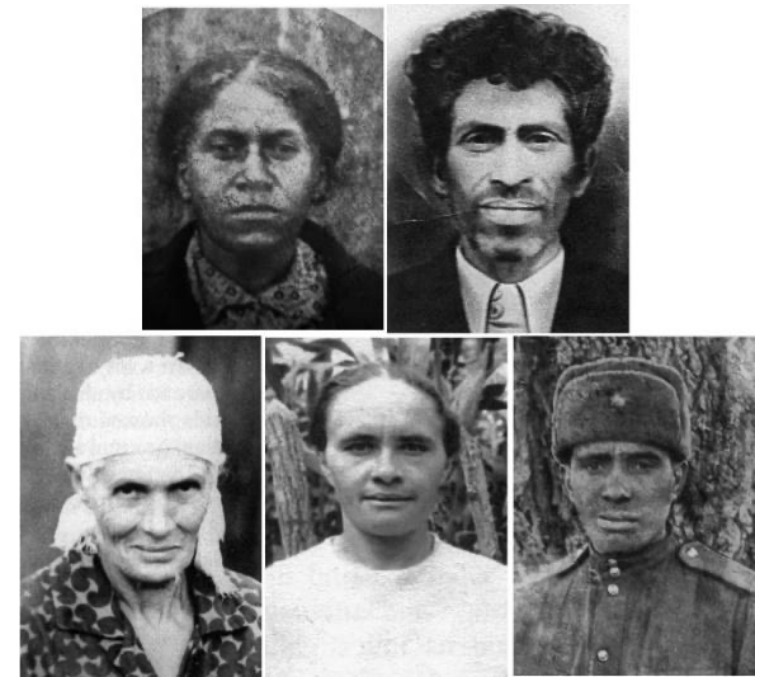
Zana’s children up top: Kodjanir and Khwit; Khwit’s children on bottom row: Tanya, Raisa, and Shaliko
Zana had four children that survived: two boys and two girls named Gomasa, Kodjanir, Dzhanda, and Khwit.
The youngest two were rumored to have been fathered by Genaba himself.
After his death, his wife continued to raise them.
However, reports passed down suggest Khwit was given the surname Sabekia and that another villager was actually the father.
Anyways, after about twenty years of living in the little village of Tkhina, Zana died and was buried in an unmarked grave on the family plot.
She wasn’t spoken of with sensationalism.
That is, not until the story was recounted to researchers in the 20th century, including Dr. Boris Porchnev.
the legacy
Zana’s story is quite controversial.
Many believe that she was violated and exploited.
Some people believed and continue to believe that she indeed was a relict hominid that inbred with humans.
Due to this vigorous debate, studies were conducted on the bones of her purported remains and those of her son, Khwit.
Although researchers reported abnormalities in the remains that were atypical of modern humans, their DNA returned with modern, East and West African traces.
The oral accounts provided by the people in the region included that the children of Zana were abnormally aggressive and strong.
In one famous incident, Khwit was in a fight with a relative which caused him to lose a hand.
Honestly, I wonder what the fight was over.
However, Zana’s children went on to have families of their own, were fully absorbed into Abkhazian culture, and were normal people.
Of all of Zana’s children, Khwit is the most documented, having passed away in 1954.
His daughter, Raisa Khvitovna, was actually one of the people interviewed by researchers regarding her father and grandmother.
There are a number of theories regarding how Zana ended up in a forest in the Caucasus and subsequent judgments as to how she was treated.
For example, some believe she was a victim of racism.
The theory is that she was brought over during the Ottoman slave trade and became separated from other people.
She ended up in the forest and became feral due to lacking human contact while simultaneously being in a survival state.
There had been talk about a ship during this time having gone missing somewhere in the area, though it was never confirmed.
They think that this may have something to do with Zana.
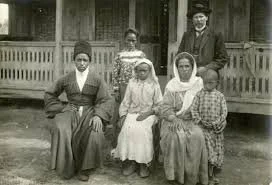
Afro-Abkhazians
Another theory is that she was a part of the Afro-Abkhazian community that was already established at the time.
However, there have been no clear connections made between her and them.
Moreover, a prevailing theory that is communicated more as fact than theory is that Zana had a condition known as Congenital generalized hypertrichosis (CGH).
This is a rare genetic condition in which there is excessive hair growth across the body.
Attached to this theory is that Zana had a developmental impairment resulting in her never learning a human language and behaving the way she did.
Overall, much of what surrounds her story is theory and speculation.
the present day
The rise of cryptozoology in a more official way, so to speak, rose in the 1950s.
So, clearly, Zana’s story was a big deal for this area of study.
Even to this day, people continue to argue for or against the existence of almastys, bigfoot, yeti, and every other name this same hominid figure is known as around the world.
This wouldn’t be the last reported sighting of someone similar to Zana in the Caucasus.
During WWII, a Soviet Red Army detachment led by Lt. Vargen Karapatyan allegedly reported having captured a wild man in the region shortly after a German invasion of the USSR.
He was covered in hair and when interrogated, also did not speak with any discernible human language.
Unsure what they were actually dealing with and in the context of them being in a war at the time, they killed him after deciding he was a German spy.
Now, let me just insert this tidbit of information: I looked up that Lieutenant's name and could find no record of him existing.
conclusion
Zana’s story is a cross between many controversial and thus sensitive topics.
Different people will want different elements of this story to be true to fit their desired truth.
But, honestly, no one knows where exactly Zana came from and what’s out there beyond the eyes of man.
How could we make sense of the plethora of reports about this creature that are unequivocally similar and consistent in their descriptions within the current mainstream scientific positioning that they aren’t real?
There’s much more about this world that we don’t know than we do.
This story is a reminder that uncertainty is as much a part of the truth as certainty.